
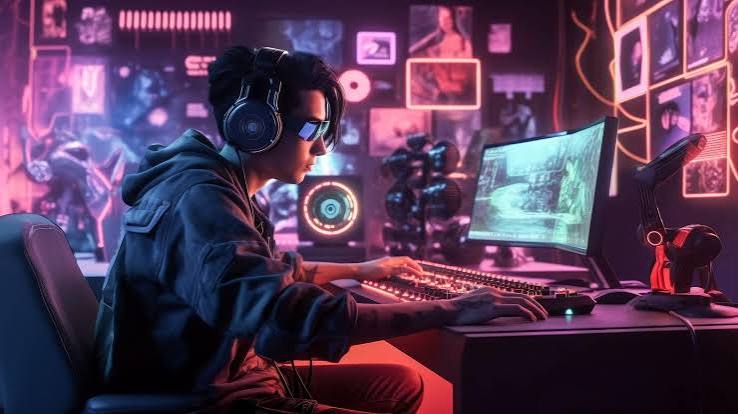
Online slot depo 10k has evolved into a powerful form of entertainment that connects people through technology. Players can now enter virtual worlds, compete in real-time matches, complete missions with friends, and communicate with communities located thousands of miles away. The growth of internet infrastructure and modern gaming devices has made these experiences accessible to a much wider audience.
The online gaming industry continues to develop rapidly. New technologies are improving graphics, connectivity, artificial intelligence, and immersion, while streaming and esports are creating additional ways for people to engage with games. As a result, gaming has become an important part of modern digital culture.
Table of Contents
- The Evolution of Online Gaming
- A Global Gaming Network
- The Appeal of Real-Time Gameplay
- Competition and Progression
- The Value of Teamwork
- Online Gaming as a Social Space
- The Mobile Gaming Revolution
- A Diverse World of Genres
- The Rise of Esports
- Gaming and Live Streaming
- Community-Driven Gaming
- Technology Behind Multiplayer Games
- Artificial Intelligence in Modern Games
- Virtual Reality and Immersion
- Benefits of Online Gaming
- Managing Gaming Habits
- Online Safety and Security
- The Business of Online Gaming
- Cloud Gaming and Wider Access
- The Next Generation of Gaming
- Conclusion
The Evolution of Online Gaming
Gaming has changed dramatically since the early days of computers and consoles. Traditional games were usually designed for individual players or local multiplayer sessions.
The arrival of internet-based multiplayer systems introduced a new approach. Players could interact with people who were not physically present in the same location.
As internet speeds increased, online games became larger and more complex. Developers could create persistent worlds, competitive matchmaking, and communities that remained active for years.
A Global Gaming Network
Online games have effectively created a global network of players. Someone sitting at home can join a match with users from several countries within minutes.
This connectivity has encouraged cultural exchange and created international communities.
Global tournaments have also helped bring players together around shared competitive interests.
The Appeal of Real-Time Gameplay
Real-time interaction is one of the main reasons online games remain engaging. Players must make decisions while responding to constantly changing situations.
Human opponents can behave unpredictably, which means no two matches are exactly alike.
Even familiar maps and game modes can feel different when players use new tactics or encounter unfamiliar opponents.
Competition and Progression
Online games frequently include ranking systems and performance statistics. These features give players measurable objectives.
Someone might aim to reach a particular rank, improve their win rate, or master a difficult game mechanic.
Progression creates motivation because players can see evidence of improvement over time.
The Value of Teamwork
Many online games rely on teamwork. Players may have specialized roles that require them to coordinate with others.
Communication helps teams make better decisions and respond quickly to changing situations.
Cooperative gameplay can also strengthen friendships because players share responsibility for achieving a common objective.
Online Gaming as a Social Space
Gaming has increasingly become a way for people to socialize. Voice chat and messaging systems allow players to communicate during matches.
Friends can maintain relationships through regular gaming sessions, while community platforms allow players to meet people with similar interests.
For some users, the social experience is one of the most important reasons they continue playing.
The Mobile Gaming Revolution
Smartphones have transformed the online gaming market. Players can access games without purchasing a dedicated console or computer.
Mobile games are available across a wide range of genres and can accommodate both casual and competitive players.
The portability of smartphones also makes gaming more convenient, allowing people to play in different environments.
A Diverse World of Genres
Online gaming offers experiences for almost every preference. Action games emphasize speed and reflexes, while strategy games focus on planning.
Role-playing games often combine exploration, character development, and storytelling. Sports and racing games provide competitive simulations.
Survival, simulation, adventure, and puzzle games add even more variety to the market.
The Rise of Esports
Competitive gaming has developed into a professional industry known as esports. Professional players participate in organized leagues and tournaments watched by audiences online.
Teams may include coaches, analysts, managers, and support staff.
The growth of esports demonstrates how online gaming can develop from a recreational activity into a professional pursuit.
Gaming and Live Streaming
Streaming platforms have changed the relationship between gamers and audiences. Viewers can watch players compete live and communicate with them through chat.
Creators may specialize in entertainment, competitive gameplay, tutorials, reviews, or gaming discussions.
Successful streamers can build large communities, creating new career opportunities within the gaming industry.
Community-Driven Gaming
Online communities contribute significantly to the success of many games. Players share strategies, discuss updates, and provide advice to newcomers.
Fan-made guides, videos, artwork, and other creative projects can expand the experience beyond the original game.
Developers can also use community feedback to improve future updates and identify problems.
Technology Behind Multiplayer Games
A smooth online experience requires advanced infrastructure. Servers must manage player information and maintain synchronization between different users.
Low latency is particularly important in competitive games because delays can affect gameplay.
Powerful hardware and modern graphics engines also allow developers to create highly detailed virtual environments.
Artificial Intelligence in Modern Games
Artificial intelligence is increasingly influencing game development. AI can improve computer-controlled characters and assist developers with testing and content creation.
In the future, games may use AI to create personalized experiences. Characters could adapt their behavior to individual players, while challenges could change according to skill.
This could make digital worlds more responsive and unpredictable.
Virtual Reality and Immersion
Virtual reality has the potential to change online gaming by placing players inside digital environments.
Instead of controlling a character through traditional inputs, users can interact with virtual spaces using specialized equipment.
Multiplayer VR could create shared environments where players communicate and interact more naturally.
Benefits of Online Gaming
When used responsibly, online gaming can provide several positive experiences. Team-based games encourage cooperation and communication.
Strategy and puzzle games can require planning and problem-solving, while creative games allow players to experiment with virtual environments.
Gaming can also provide entertainment and relaxation during free time.
Managing Gaming Habits
Although gaming can be enjoyable, balance is essential. Excessive play may interfere with sleep, physical activity, work, education, or personal relationships.
Players can reduce these risks by taking regular breaks and maintaining a reasonable schedule.
Healthy gaming habits allow entertainment to remain part of a balanced lifestyle.
Online Safety and Security
Players should protect their accounts and personal information when using online services.
Strong passwords and two-factor authentication can reduce the risk of unauthorized access. Users should also avoid suspicious links and unknown downloads.
If players encounter harassment or inappropriate behavior, reporting and blocking tools can help protect their online experience.
The Business of Online Gaming
Online gaming has become a major economic sector. Companies generate revenue through game purchases, subscriptions, advertisements, digital items, and additional content.
The industry also supports careers in programming, game design, animation, sound production, marketing, esports, streaming, and community management.
As demand continues to grow, gaming is likely to create even more professional opportunities.
Cloud Gaming and Wider Access
Cloud gaming is another development that could change the industry. Remote servers can perform much of the processing required to run demanding games.
Players can then access these experiences through compatible devices and internet connections.
If network infrastructure continues improving, cloud gaming could reduce the importance of expensive local hardware.
The Next Generation of Gaming
Future online games are likely to combine several technologies. Artificial intelligence could make virtual characters more intelligent, while cloud services could improve accessibility.
Virtual and augmented reality may introduce more immersive forms of multiplayer interaction.
Social features could also expand, allowing players to use games as places to attend events, communicate, create content, and participate in shared activities.
Conclusion
Online apk slot has become much more than a method of playing video games over the internet. It is now a global ecosystem that combines entertainment, competition, communication, creativity, and technology.
The continued growth of mobile gaming, esports, streaming, cloud services, artificial intelligence, and immersive devices will create new possibilities for players around the world.
While responsible gaming and online security remain important, the future of online gaming looks increasingly connected and interactive. As technology continues to advance, digital games will remain a major source of entertainment and an increasingly important part of modern online culture.
